
Discover the 5 Best Mountain Destinations in Northern Vietnam
If you’ve already explored Vietnam’s vibrant cities and sun-drenched beaches in your travel plans, it’s time to look beyond. The true hidden treasures of Vietnam lie in the northern highlands, where majestic mountain ranges stretch endlessly across the horizon. In this blog, we’ll guide you through the top 5 mountain destinations in Northern Vietnam, packed with essential travel tips—perfect for your upcoming adventure.
Vietnam’s Mountain Region – What to Expect on Your Trip
Vietnam’s mountains cover nearly three-quarters of the country, sheltering most of its forests, rare wildlife, and diverse ethnic communities. Around 24 million people live here, many belonging to minority groups that have preserved their unique traditions and vibrant cultures for centuries.
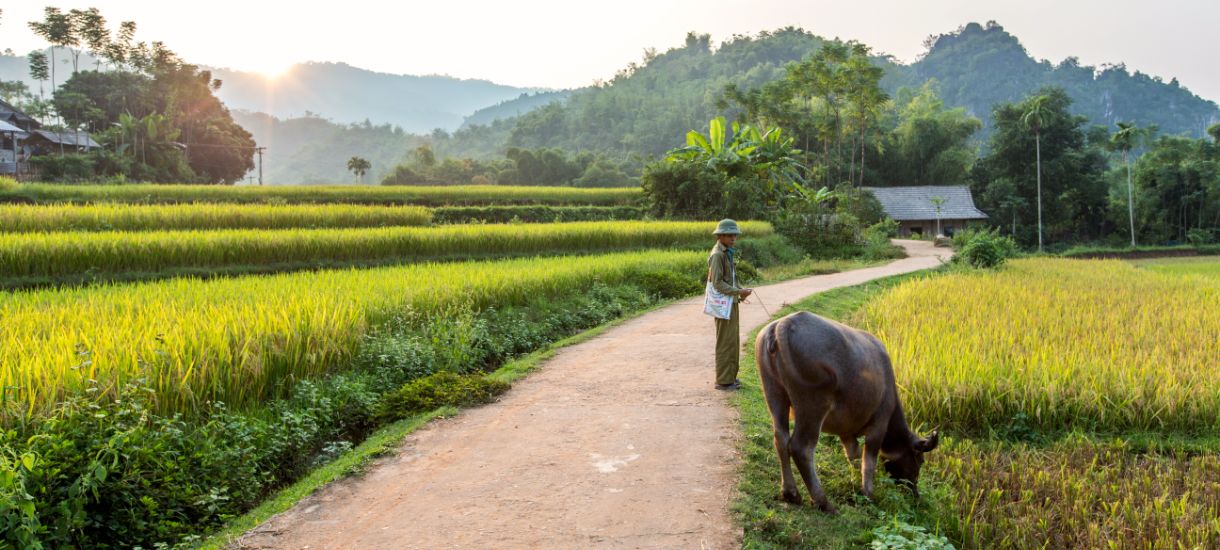
The northern highlands offer more than just breathtaking scenery—cloud-covered peaks, terraced rice fields, winding rivers, and spectacular waterfalls. Visitors can trek along scenic trails, explore lively upland markets, and admire traditional costumes rich in color and embroidery, crafted by skilled local women.

Just a few hours’ drive from Hanoi, Northern Vietnam’s mountains open up unforgettable adventures. From the hiking trails of Sapa to the dramatic landscapes of Ha Giang’s Dong Van Karst Plateau, every journey is a blend of nature and culture.
Now, let’s explore the Top 5 Mountain Destinations in Northern Vietnam you shouldn’t miss on your trip.
1. Sapa – A Summer Retreat in the Northern Highlands
Originally established by the French in the early 20th century as a cool mountain escape from Hanoi, Sapa remains one of Vietnam’s most iconic highland destinations. With a modern highway now connecting it to Hanoi, travelers can easily reach this stunning region.
Best Time to Visit: Summer and autumn paint Sapa in vibrant colors, making it perfect for trekking through lush rice terraces and visiting H’mong and Dzao villages to experience their unique cultures. For adventure seekers, conquering Mount Fansipan—the “Roof of Indochina” at 3,143 meters—offers a thrilling challenge.
Local Life & Markets: A highlight of Sapa’s culture is the Bac Ha Sunday Market, where ethnic communities gather to trade, socialize, and share stories. Scenes like a farmer carrying a pig to market—and possibly back home if unsold—offer authentic glimpses into traditional mountain life.
Getting There: Located about 340 km northwest of Hanoi, Sapa can be reached by bus, overnight train, or for the adventurous, by motorbike along winding mountain roads.
Where to Stay:
Topas Ecolodge – An eco-friendly retreat 45 minutes from town.
Hotel de la Coupole MGallery & Silk Path Grand Sapa Resort & Spa – Luxury stays in central Sapa with easy access to dining and nightlife.
Ville De Mont Mountain Resort – Named Asia’s Leading Lifestyle Resort, perfect for those seeking both comfort and elegance.
👉 You may also like: Top 8 Vibrant Markets Around Sapa Offering Deep Cultural Insights

2. Ha Giang – Northern Vietnam’s Hidden Gem
Located at Vietnam’s northernmost tip, Ha Giang is remote and less visited, yet it offers some of Southeast Asia’s most breathtaking mountain landscapes. The Ma Pi Leng Pass, known as Vietnam’s “King of Passes,” winds 1,500 meters above sea level along dramatic limestone cliffs, with the emerald Nho Que River sparkling far below—a truly unforgettable sight.
Step into Dong Van Old Town, where centuries-old earthen houses, brown-tiled roofs, and a lively highland market evoke a sense of nostalgia. This small community of just 40 households, set against rocky cliffs, offers a glimpse into a tranquil, close-knit way of life. Recognized as a UNESCO Global Geopark, the Dong Van Karst Plateau remains remarkably preserved.
For a closer connection with nature, take a 40-minute boat ride along the Nho Que River, surrounded by towering peaks. Ha Giang’s terraced rice fields in Hoang Su Phi rival Sapa’s in beauty but feel more authentic due to fewer tourists. Local markets showcase ethnic specialties like vibrant brocades, linen, buckwheat cakes, and Thang Co, a traditional mountain dish.
Traveling to Ha Giang:
About 400 km from Hanoi, best reached by car along a scenic 6-hour route. Many travelers extend their trip to explore the full Ha Giang Loop.
Where to Stay:
P’apiu – A serene mountain escape, awarded Asia’s Leading Romantic Resort 2023.
Palm Ha Giang Ecolodge, Panhou Retreat, H’Mong Village Resort – Comfortable mid-range options set away from the town center.
Ha Giang’s majestic mountains, authentic culture, and untouched landscapes make it a must-visit for any Northern Vietnam adventure.

3. Ba Be National Park & Lake – A Sanctuary of Pristine Nature
Nestled in Bac Kan Province, northeast of Hanoi, Ba Be National Park covers 76 km² of lush valleys, winding rivers, caves, waterfalls, and tropical forests. Hunting is prohibited, though local villagers are allowed to fish. The park is home to several ethnic communities across 10 villages, with the Tay people living here for over 2,000 years.
Dominated by towering limestone peaks up to 1,500 meters, the park is centered around Ba Be Lake, a 6.5 km² freshwater jewel often called the “green heart” of Northeast Vietnam. Revered for its untouched landscapes, Ba Be offers a variety of activities for nature lovers and adventurers alike.
Things to Do:
Trek to scenic waterfalls or cycle through quaint villages.
Kayak along the Nang River or explore Puong Cave, home to countless bats.
Cruise on Ba Be Lake in a traditional boat, visiting An Ma Pagoda on a tranquil islet.
Discover Hua Ma Cave, an 800-meter natural marvel shaped over millennia.
Getting There: About 240 km northeast of Hanoi, a car journey takes roughly 5 hours.
Where to Stay: The park’s main accommodations are authentic local homestays, offering immersive experiences with the Tay community and the region’s tranquil way of life.
Ba Be National Park is perfect for travelers seeking untouched nature, cultural insights, and peaceful escapes in Northern Vietnam.

4. Mai Chau Valley – A Tranquil Escape from Hanoi
Tucked in a valley surrounded by rolling hills, Mai Chau offers a peaceful retreat from Hanoi’s bustling pace. While the town has grown slightly touristy, just 20 km away lies quiet countryside dotted with rice fields and traditional Thai villages, perfect for relaxation. Elevations range from 200 meters in town to 1,536 meters in Pa Co Village, home predominantly to the Hmong community.
Local Culture & Lifestyle: The White Thai people, the largest ethnic group in the valley, wear traditional attire mainly for festivals and special occasions. Skilled in weaving intricate textiles and performing traditional dances, they welcome visitors with genuine warmth. Stilt houses along streams and rivers reflect the Thai belief in water as the source of life.
Activities: Mai Chau is ideal for biking, hiking, and slow exploration. Cycle or walk through rice paddies, cassava fields, and rural hamlets to experience the calm rhythms of local life. Evenings are best spent sharing a meal with locals and staying overnight in a traditional stilt house, waking to the gentle sounds of the valley.
Traveling to Mai Chau: Located about 140 km west of Hanoi, Mai Chau is accessible by bus, private car, or motorbike. Limousine buses provide a more comfortable ride.
Where to Stay:
Mai Chau Ecolodge & Mai Chau Hideaway – Cozy valley retreats.
Avana – Luxury resort atop the mountains, awarded Asia’s Leading Retreat 2021 & 2022, featuring a private waterfall and serene spa.
Mai Chau Valley is a serene blend of natural beauty and authentic ethnic culture, perfect for travelers seeking a slow-paced escape in Northern Vietnam.

5. Cao Bang – The Ultimate Off-the-Beaten-Track Trekking Destination
Cao Bang may be Vietnam’s least-visited northern province, but its remote location is what makes it truly special. With rolling paddy fields, winding rivers, and untouched landscapes, it rewards travelers seeking an authentic Northern Vietnam adventure.
Must-See Attraction: The crown jewel is Ban Gioc Waterfall, one of the world’s most spectacular waterfalls. Straddling the border of Vietnam and China, it cascades 60 meters along the Quay Son River, making it the fourth-largest waterfall along an international border.
Trekking & Exploration: Cao Bang offers peaceful day treks through villages inhabited by ethnic communities. For the more adventurous, dense forests and rugged mountains provide challenging trails with almost no other travelers in sight—giving you the mountains all to yourself.
Traveling to Cao Bang: About 370 km from Hanoi, the journey typically takes 6 hours by bus.
Where to Stay:
City center: Several quality 3-4 star hotels.
Villages: Homestays offer immersive cultural experiences, with locals serving delicious home-cooked meals.
Cao Bang is perfect for travelers craving untouched nature, serene trekking, and authentic ethnic culture.
👉 Read more: Top 7 Must-See Places in Cao Bang

Vietnam Mountain Adventure with Golden Holiday Travel
We hope our guide to the Top 5 Mountain Destinations in Northern Vietnam has inspired your next adventure! Northern Vietnam offers breathtaking landscapes, vibrant ethnic cultures, and unforgettable experiences, and we’re here to help you explore it all.
For a tailor-made Northern Vietnam adventure, contact us via our form, WhatsApp at +84 988 451 530, or email [email protected].
The Golden Holiday Travel Team is ready to provide expert travel tips, craft your personalized itinerary, and ensure your Vietnam trip is seamless, memorable, and truly extraordinary.